Why Art Makes Us Feel Calm
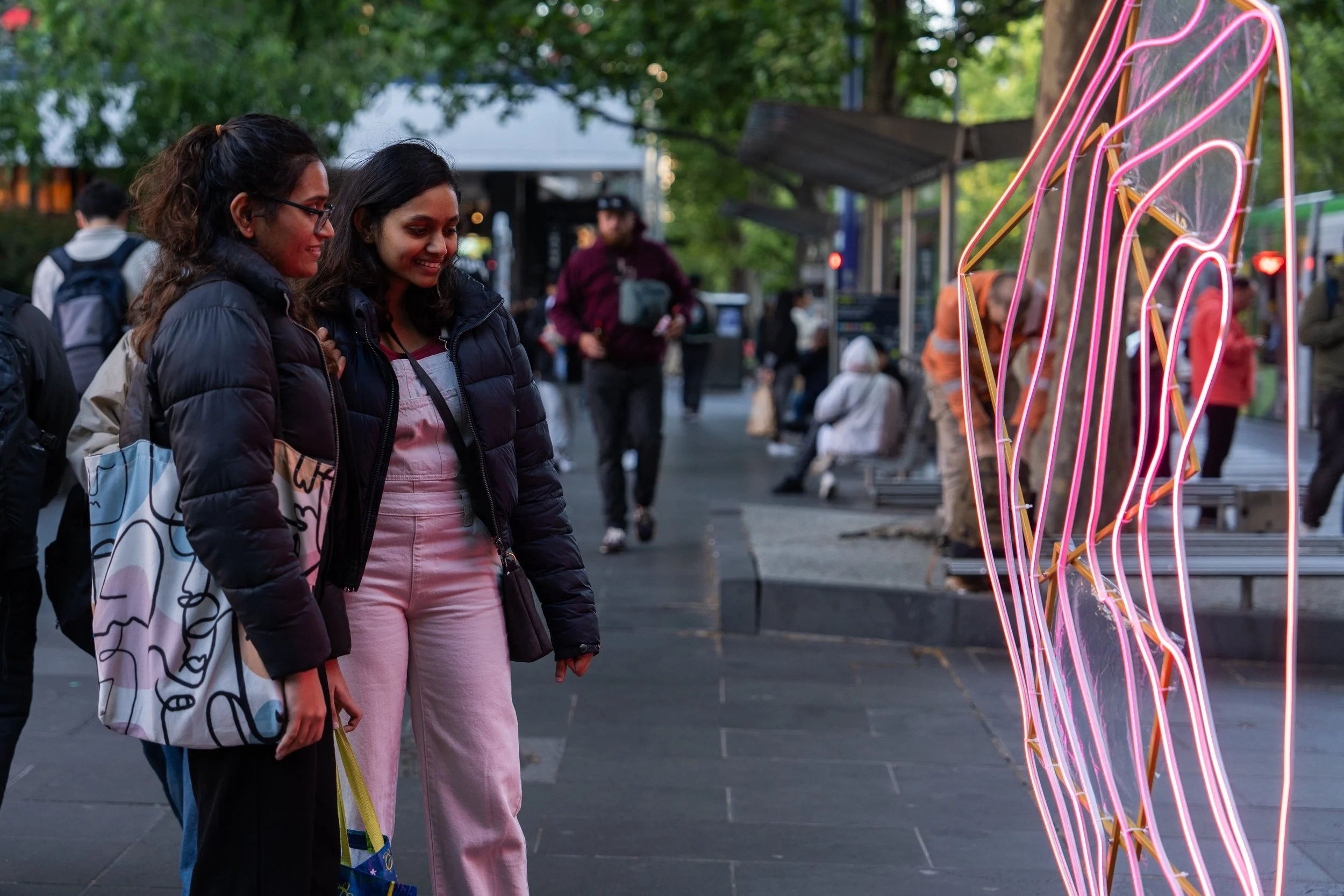
Light-based artwork Urban Serenity (by Jade Armstrong) explores colour and perception, illustrating how art and neuroaesthetics can influence calm and emotional wellbeing.
The Science Behind Neuroaesthetics.
Have you ever noticed how certain artworks make you pause?
Not because they are loud or dramatic, but because something about them quietly settles the mind - - - A colour that feels soothing - - - A pattern that draws your eye into a gentle rhythm - - - A moment where the noise of the day seems to soften - - -
Many people experience this feeling in galleries, museums, gardens, or even in their own homes. Standing in front of a painting, sculpture or installation, the body relaxes slightly. Breathing slows. Attention sharpens. For a long time this effect was described as something mysterious. Today, science is beginning to explain why it happens.
Welcome to the fascinating world of neuroaesthetics.
What Is Neuroaesthetics?
Neuroaesthetics is a growing field of research that explores how the brain responds to beauty, art and sensory experiences.
Scientists, psychologists and artists are increasingly collaborating to understand questions like:
Why do certain colours feel calming?
Why do patterns, symmetry and rhythm feel pleasing?
Why can music, art or light installations shift our mood so quickly?
Research suggests that aesthetic experiences engage multiple systems in the brain. When we encounter something visually harmonious or intriguing, brain regions connected to emotion, attention and reward become active. In simple terms, the brain recognises something meaningful, interesting or beautiful and responds accordingly. This response can influence how we feel physically and emotionally.
Art and the Nervous System.
One of the most interesting discoveries in recent years is how aesthetic experiences affect the nervous system.
Our bodies constantly move between two states:
- - - Alert mode - - - This is the state associated with stress, deadlines, noise and constant activity.
- - - Rest and restore mode - - - This state supports relaxation, creativity, reflection and recovery.
Art, nature and sensory beauty can gently encourage the body to shift into this second state. When we slow down to observe something visually engaging, the brain reduces background noise and focuses attention. This can create a subtle calming effect that many people instinctively recognise. You might notice this feeling when looking at soft natural colours, flowing patterns, light moving across a surface and balanced compositions.
These sensory qualities can guide the brain toward a quieter, more attentive state.

Flowing patterns and repeating lines can guide the eye into a calm visual rhythm.
*****Link image to art page
*****
Why Certain Visual Experiences Feel So Good.
Several visual characteristics appear particularly powerful when it comes to calming the mind.
Colour.
Colour has a profound effect on how we feel. Research suggests that different hues can influence emotional responses and even physiological reactions. Soft blues, greens and warm neutrals are often associated with relaxation, while vibrant colours can stimulate energy and curiosity.
Artists have intuitively worked with these relationships for centuries.
Pattern and Rhythm.
The human brain loves pattern.
Repeating shapes, flowing lines and rhythmic structures provide a sense of coherence that the brain can easily process. This makes the experience feel satisfying and often soothing. You see this everywhere in nature. Leaves, shells, waves and clouds all contain repeating forms that the brain recognises and enjoys. Many artworks draw on these same visual rhythms.
Light.
Light is one of the most powerful sensory influences we experience.
Changes in brightness, colour temperature and direction of light can dramatically alter how a space feels. Soft, diffused light often encourages calm, while dramatic contrast can create excitement and tension.
Artists working with light frequently explore these emotional effects.

Light can dramatically shape how a space feels. Shifts in colour and brightness influence mood in Jade Armstrong’s Distant Rays.
Art as a Moment of Stillness.
Perhaps the most powerful aspect of art is that it invites us to pause.
In a world that often moves quickly, moments of stillness can be surprisingly rare. Art has the ability to interrupt that pace and redirect our attention. Instead of focusing on tasks, notifications or obligations, we simply observe. - - - one colour - its texture - the play of light - - -
That shift in attention can be enough to bring the nervous system into a more balanced state. It is a small experience, but it can have a meaningful impact.
How This Influences My Practice.
*********** Many of my artworks > Many of my artworks - Link to: Artworks page
Many of my artworks explore how sensory experiences can shape our emotional state. Light installations, colour studies and immersive environments are all ways of experimenting with how visual elements influence perception and mood.
When designing an artwork or installation, I often think about questions such as:
How will someone feel when they encounter this space?
Where will their attention move?
Will the experience encourage curiosity, calm or reflection?
These considerations sit at the intersection of art, psychology and sensory design. Art does not only exist to be observed. It can also shape how we feel in a space.
Bringing More Art Into Everyday Life.
The calming effects of art are not limited to galleries.
- - - Small aesthetic moments exist everywhere - - -
- - - The way sunlight moves across a wall - - -
- - - The colours of flowers on a table - - -
- - - A drawing or sculpture that quietly anchors a room - - -
These details can influence how a space feels and how we experience our day. Sometimes the most meaningful artworks are not the largest or most dramatic ones. They are simply the ones that encourage us to pause and notice.
Use an image that feels poetic or atmospheric.
Good choices:
• detail of an installation
• close-up of colour
• sensory artwork moment
Caption suggestion:
Art has the ability to slow our attention and invite a moment of stillness.
A Final Thought.
Art does many things.
It can challenge ideas. Spark conversations. Tell stories about the world around us.
But sometimes its most powerful role is much quieter.
Sometimes art simply gives the mind a place to rest.
Continue Exploring.
If you’re curious about experiencing these ideas in person:
Explore available artworks →
Join an upcoming workshop →
Enquire about a commissioned installation →
Or subscribe to receive occasional studio reflections and updates.
***********Link to: Your Workshops page
Link 3 — Commissions
Some of these ideas are also explored through site-specific installations and commissioned artworks.
Your Commissions / Installations page
—-
Related Reading
You may also enjoy:
• The Power of Light in Art and Architecture
• Why Immersive Art Experiences Are So Powerful
• How Colour Influences Emotion and Mood